
Coffee, Cameras and Kevlar
And an event in London!
Welcome to Riveting, with Roma, where I explore the objects we shape, the people who design them, and the world they create in return.
It's officially Autumn, and I'm not pleased that it is getting darker earlier. I do miss the clear blue skies, and don't do well with murkiness. So this month, I'm hoping for some unexpected light, some insights, some flashes to get me through to the end of the manuscript I'm currently working on. Due at Christmas, I'm so close. Once I finish drafting the last chapter, I need to write the conclusion, the introduction (in that order) and then edit the lot. Easy peasy.....
EVENT ALERT!
Last month's interviewee, WILL ARNOLD and I will be at Gower Street Waterstones on 13 October chatting about our books! Tickets here.
For some inspiration, then, here are some UNEXPECTED materials used to create stuff that humans use everyday.
Comment / reply to tell me how many of these 10 you knew about!
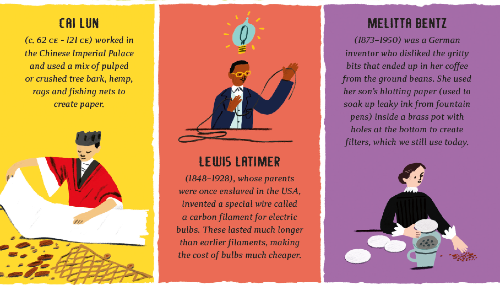
1/ Cai Lun (born around 62 CE) worked in the Chinese Imperial Palace and used a mix of pulped or crushed tree bark, hemp, rags and fishing nets to create paper.
2/ Lewis Latimer (1848–1928) was the son of former slaves in the USA who invented a special wire called a ‘carbon filament’ for electric bulbs. These lasted much longer than earlier filaments making the cost of bulbs much cheaper.
3/ Melitta Bentz (1873–1950) is a German inventor who disliked the gritty bits that ended up in her coffee from the ground beans. She used her son’s blotting paper (used to soak up leaky ink from fountain pens) inside a brass pot with holes at the bottom to create filters, which we still use today.
4/ Percy Lavon Julian (1899–1975) invented a material called ‘AeroFoam’ from proteins he removed from soybeans. This is used in fire extinguishers.
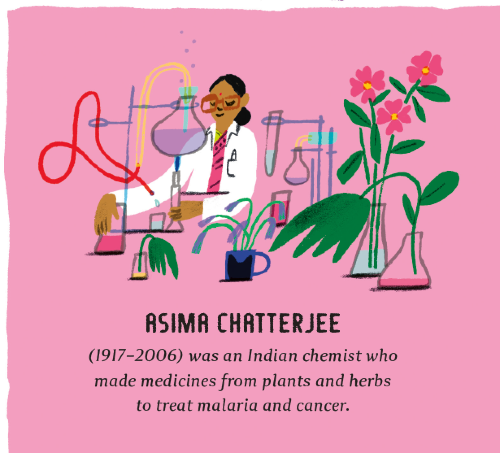
5/ Asima Chatterjee (1917–2006) was an Indian chemist who made medicines from plants and herbs to treat malaria and cancer.
6/ Stephanie Kwolek (1923–2014) was a Polish American chemist who invented Kevlar, a type of fibre used to make a strong fabric that protects firefighters from extreme heat.
7/ Narinder Singh Kapany (1926–2020) was an Indian American physicist who used a bundle of thin glass fibres to create a cable that could transmit high quality images (fibre optics).
8/ George Carruthers (1939–2020) invented a special camera that went to the Moon. It is plated with gold! It helped scientists discover the presence of hydrogen in space and understand air pollution.
9/ Richard Turere is a Kenyan inventor who learned about electronics by breaking radios. At age 11, he created ‘Lion Lights’ out of LED bulbs, solar panels and an old car battery to keep lions and livestock separated.
10/ Clarice Phelps (born 1981) is an American scientist who purified the material berkekium-249. It used in the discovery of new element Tennessine, the second heaviest known element on Earth.
As always, sharing my (free!) work and encouraging people to sign up really does make a difference to my writing career. And if you can, please review my book on amazon, I know, but again, it makes a difference.