Built to Bend
Resilience through disruption
Resilience through disruption
People are often shocked when I reveal that every single structure we build is designed to move. Especially the tallest ones.
Take an Italian biscotti, bend it, and it snaps. This brittle behaviour isn't how we want our structures to fail, because the collapse would be catastrophic. But a gooey, chocolate chip cookie will deform before it cracks. If engineers notice that a bridge or building has altered in shape more than we expect, this would be a sign that repair is needed. But it remains standing in the meantime.
Structures are constantly subjected to the pulling force of gravity – which changes depending on how many people / vehicles / machines occupy it – and random buffeting from gusts of wind and, in some places, earthquakes. Those that are flexible enough to absorb these forces are the ones that will last.
And this applies at so many other levels.
Take us.
Life throws all sorts at us, and we have ups and downs. But if we are adamant that our world must look and function in a certain way, it will become nearly impossible to navigate the messy reality. Having a child must be the epitome of such a situation, and one I struggled with a lot. Over time, I've learned that every single day will have high highs and low lows, and that I need to actively notice the good times, and look closely at my feelings when I'm struggling. Focussing on only one of those doesn't serve our mental health in the long-term.
And take companies.
I've worked for a range of large corporates in my career. Again, having a fixed and rigid structure is a recipe for disaster. If there was anything that forced our work places to be flexible in a very, very disruptive situation, a pandemic would be it. It's the employers that took a breath, looked at options, carefully considered them, consulted with all levels of staff, and upskilled their teams to deal with the change in technology that did the best. And they had to keep adapting, lockdown after lockdown. And that's not just about the bottom line, but also employee well-being. Trying to stick it out as 'business as usual', or, rushing to implement big, expensive changes without thinking, were brittle approaches.
So in short, let structures teach us about the philosophy of life and work.
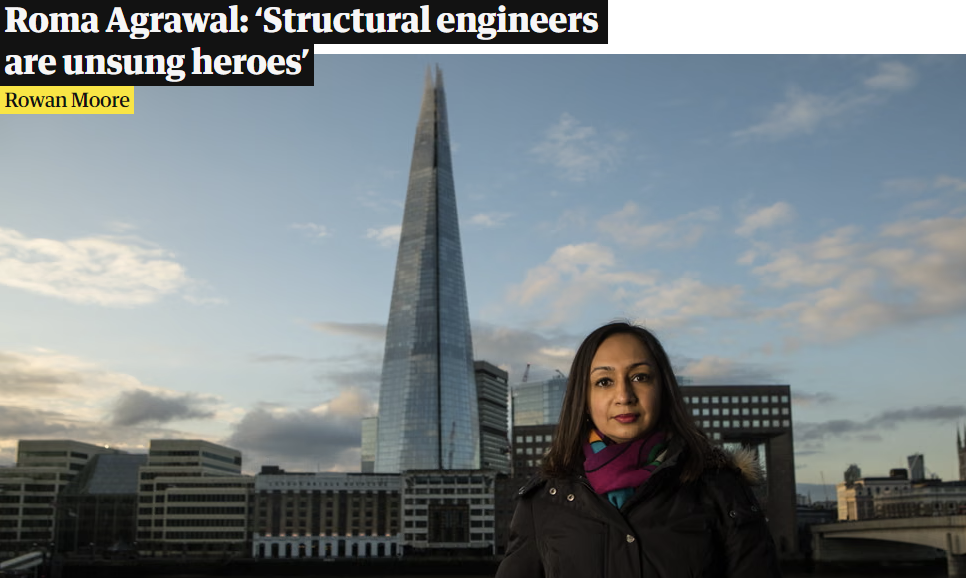
And if you're interested, skyscrapers are often designed to bend by their height divided by 5 or 6 at the top. So a building like The Shard can safely sway around half a metre. And this is a good thing.